Stories come from the strangest of combination of places, events and people. They hit me over the head sometimes as I'm walking - often times quite actually because my head is usual off pondering in the clouds. This is a wild circle of thought that occurred to me this week:
Tornado Sirens
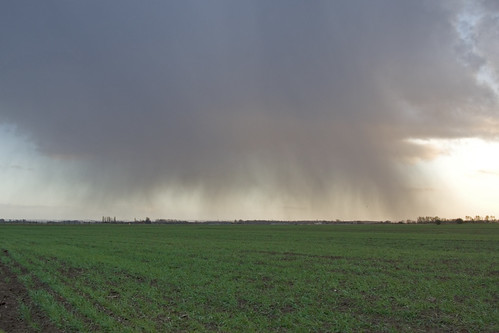
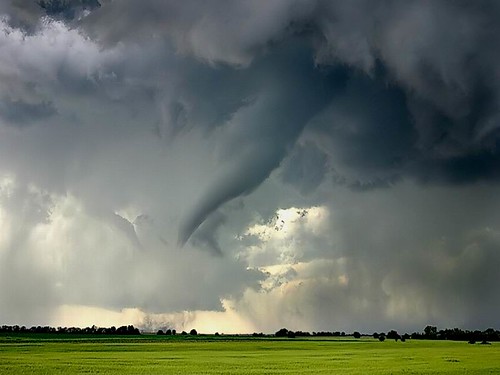
It is early spring and they've begun testing the tornado sirens in our city, as they do most places with a tornado warning system. The siren blares out in thick waves of sound - not merely loud but inescapable. This is sound you can feel rattling the pavement beneath your feet, shaking your ribcage, startling the air, stopping your heart. You are breathing in that sound. Unlike the eardrum-cracking call of ambulances and police cruisers, it does not fade away as trouble races down the center lane. Growing up in Nebraska, this is typical of the spring and summer months - the worry that sudden disaster may be hurtling nearby.
by Anthony Woods
Sirens and Whales
When I was a little girl standing my grandparents' driveway I remember asking my mother what that horrible drone was. She said it was a whale, perhaps out of sarcasm. (She might have actually said "dying whale" but I doubt she would have been that mean.) I was a gullible imaginative child and wanted to see this whale, marvelling at the idea there was an actual whale somewhere in our landlocked state. As we drove home, I had a vivid picture in my head of a whale lying out on the plains somewhere... not exactly making the connection that if, by some strange set of events, a whale was lying out in the middle of Nebraska, it would be a very sad story.
Whale Fluke 6 October 2012, Gloucester, Mass.
Whales in Nebraska
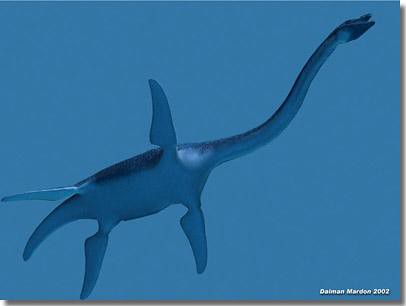
The closest whales have come to Nebraska was the in the Cretaceous Period when a great north-south swath of the continent was a shallow sea called the Western Interior Seaway, stretching from the Gulf of Mexico to the Arctic. The "whales" were plesiosaurs (probably smaller than modern whales) - head of a brontosaurus and sea turtle flippers.
By Dee Jay Morris
A Sea in Nebraska
Then it strikes me that Nebraska geology and paleontology is rich. We had a sea! We were underwater! Okay, "we" weren't but the land that became our state (and Kansas, South and North Dakota, Minnesota and Texas) was underwater. Comparing that reality to our current drought, the heat, the snow storms, the farmland, the ranches, the bison herds, the sand dunes... wow! This storyteller is struck by the malleability of the earth beneath our feet, the fact that some day Nebraska may not look like it does now. I don't know what the projections indicate for our geologic future, but if the Rockies continue to grow, so might our Plains. This might become a desert or a marshland. Someday Nebraska may have native camels (yes, camels) or saber-toothed cats (the descendents of our urban ferals?), bear dogs or a new breed of bison. Or will there be a sea big enough for humpbacks and dolphins to swim down to greet us?
by Petter Sandell
And there will probably be tornadoes spilling across whatever version of the Plains comes to pass. Will the whales warn us with their song?