Wednesday, October 30, 2013

Real Ghost Stories

This summer I was told a ghoulish story after dark in an old Civil War-era cemetery.  

A group of friends and I had spent the afternoon out in the country in our friend Neal's uncle's pasture in south central Nebraska shooting pistols, shot guns and scope-rifles.  This was a new experience for many of us city folks.  We'd climbed into the back of Neal's pick-up - some of us hanging on in the back - and he took us over hills and ruts and around grazing, jaded cows to the place where he'd set up targets.  We plugged our ears, shot at Diet Coke cans with a scope-rifle, hit clay pigeons with a shot gun and generally had a good time as the sun went down and the full moon showed its face.

Neal told us the pasture we were shooting in was not far from the site of an Indian battlefield.  It turned out to be the prelude to the night's next activity.  He took us over dirt roads and onto a path that meandered down through and behind a corn field.  At the end of this road was the Farmers' Valley Cemetery - complete with the Nebraska marker - tucked away out of sight. 

I took this photo as we left.  It was about 11 or midnight. 

Among the graves were Civil War veterans and their families, some of the first settlers of in that area, children who had died young in skirmishes with the Sioux.  It was the quintessential prairie graveyard, small and understated, rich in history.  We walked around with flashlights, looking for names of the veterans, amazed that the stones were still legible even after 150 years.  Then, as the night breeze picked up and got chilly, Neal told us a chilling tale.

He and his brothers had been staying in a cabin not far from where we were standing one night several years ago when they heard the sound of hammering and incantations. Needless to say, they lay in terror that night.  The next morning, one of the flat stone-slab graves had been broken into and the body removed.  Later on, a group of satanists were arrested in connection to the theft.  Neal told us with a deadly-serious expression that these satanists had planned to smoke the bones.  When we saw the grave, the stone shards were patched, but the evidence of their task remained.  A chill traveled down my spine.  Something rustled far off in the trees,  or perhaps in the corn field.  My spine tingled.  We all shivered. 

It was hard to tell with Neal's expression if he was kidding us, or if he'd invited friends along to scare the living daylights out of us.  We saw no ghouls, living or otherwise, but I know I felt something... some awareness of the past that hadn't been there before.  The dark deeds of others can mark a place in ineffable ways.

I kept thinking about the story of the theft of bones and how the real mysteries of this world are the living ones. 

In August, just weeks after the group of us had been there, an eighteen year old was arrested for vandalizing over 50 tombstones in Farmers' Valley.  He was charged with criminal mischief, and the local community rallied together in September to begin repairing the damage.  A Journal Star article conveys the sense of loss this act created; the cemetery is history, personal history, and it must be guarded and cared for and visited.  I am so glad I saw it when I did.

I've found the Farmers' Valley Cemetery on Rootsweb, which tells the story of Marion Littlefield's death in battle with the Sioux, the arrival of Scottish settlers to the area, and the hard lives that were lived out here.  This little slice of history is just south west of Henderson, Nebraska in Hamilton Co.  Oh, the stories this ground can tell.

Wednesday, October 23, 2013

"I should be" Versus "I am"

Write and forget the rest of the world.
"Write and forget the rest of the world" by Mary Grace Ardiente de Castro on flickr

I often find myself plagued by the ubiquitous word "should." This author does this, therefore, I should be doing that, or I must do that.  The work clicks in when I measure myself against the success of other authors: failing to make a thousand or more words on a page, not getting anywhere with agents, not having time for my online writing community.  For whatever reason, negative messages pop up in brain like weeds and choke out all the good beautiful foliage that should be there:

- "I should have been trying to get pieces published in high school."
- "I should be getting up at 5 a.m. to write and fulfill a word quota for the day."
- "I should have been done with that story by now."
- "I should write this one story because it seems marketable."
- "I should be blogging at least once a week, in a witty and engaging manner using lots of graphics, video and subliminal messaging."
- "I should be tweeting and posting on Facebook and commenting in articulate paragraphs on other blogs and writing reviews on Goodreads and making social connections and...."
- "I should have more to show for my writing career."
- "I should go to that one writing conference because all the other up-and-coming writers are going, getting advice, getting agents."
- "I should be an extrovert."
- "I should be able to write anywhere and everywhere, even with a jackhammer right outside the office window."
- "I am doing this all wrong."

None of these are necessarily true, although it is strange how much we believe them.  And when, say, I physically cannot get myself out of bed at 5:00 to write, the whole day is ruined before it starts.  "I'm a bad writer!  I can't get my act together!  I'm not disciplined!  I only wrote one whole sentence today!"  And what of these fantasy writers who are getting agented all over the place?  Is this really true?  Is it really that easy?  Or is it just part of the negative static clogging our creative minds, keeping us forever in the past?

So we're not like that hypothetical group of successful, smiling, rich, creative, brilliant people. They are an illusion.  No one has an easy writing life.  Writing is freaking hard.  Period.  Writers come on a vast spectrum of disciplines and habits and quirks.  You may not be able to function at the writing desk without a shot of whisky, or maybe you need complete silence.  Some write in bed.  Others on the subway.  Some can write in little snatches on the go, others need to stick close to home base.   Or if you're Dan Brown, you need to hang upside down to get the creative juices flowing.  Where you fall on the spectrum of discipline and a quota of words is part of you. 

The point is we should be focused not on the writers we think we should be, but on the writers we already are and what we're accomplishing now

I'd thought the whole scenario of getting up early and getting work done made perfect sense.  And it did for a few days.  It did feel awesome to be up at 5:30 and writing away, but the weekends came, I'd sleep in and it turned out to be a very difficult routine to maintain.  I'd panic - there was no time or mental space to tinkering with my WIP at work (jackhammer noises coming from the elevator shaft - there is no quiet way to disassemble and replace an elevator) and by the time I'd get home, I'd be too beat to do anything creative.  Coming home at night is the bookend of the day - things are winding down, kitty needs to be fed, the trash taken out, my dinner made, the dishes washed, the shower taken.  So I've been spending time at a coffee shop not far from work for an hour to two afterwards.  I have found more enjoyment working there at my own pace, without the constraints of time than when I was forcing myself out of bed at an ungodly hour.  Who knew?

I haven't been measuring word counts, either, because I feel - especially with a tentative draft - it is a great way to perpetuate loads upon loads of meandering Nothing.  I cringe at the idea of National Novel Writing Month, of having to spit out 1,667 per day with little room for thoughtful brainstorming or rest.  But that's okay. Many people enjoy the exhilaration of diving right in, to "get 'er done!" as the great Nebraska philosopher Larry the Cable Guy says.  It just doesn't work for me.  There are times when quantity cannot replace quality. 

Personally, I feel like I've spent a great deal of time trying to imitate those visibly successful writers, join bandwagons and get swept up for a spell in a particular creative zeitgeist. I joined Twitter only to panic that no one was paying attention to me and that I couldn't write a 143 character tweet to save my life.  Nor did I have the energy to dance across the internet leaving an electronic trail of comments, shouting "I'm out here!  Pay attention to me!"  I hated myself for trying. 

There is no magic formula for success, particularly success in writing.  No set time frame.  No standard career plan.  And yet we still believe that if we hang upside down just like good ol' Mr. Brown, we might be just as successful - a wide readership, bestsellers, movies, mansions.  If we're smart or well-read enough we might get the Man Booker Prize like 28 year old New Zealander Eleanor Catton did this month.  And... if we don't we tend to think, "hey, I'm 28. I must have missed the mark and my big break.  My life is forfeit."  Bah.

The things we tell ourselves.

Of course, there isn't anything wrong with social media, with conferences, with challenging yourself, but in the day to day, while we're in-progress and still working full-time jobs, it is so much better to focus on the gifts and the circumstances we were given to continue on with our work.  To write because we're compelled and made to write, not to conquer everything in one day or judge the whole of one's budding career by a string of bad days or where others tell us we should be.  If we're trying our best to hone our craft and navigate the publishing world, that's success.  Success might take years and years.  It doesn't matter what it looks like to anyone else.

I return to Anne Lamott's advice about the one-inch picture frame: tiny assignments - write one description, one little sentence and see where it takes us.   And from there, just write moment by moment.  Focus on what can be done today, or this hour, or until the baby wakes up from his nap, not what "should" be done in a week or even a month.  Otherwise, writing becomes the ultimate in Sisyphean feats. We must follow a string, a stepping-stone path of little goals - keeping the future in mind but not comparing goals to others' achievements.  We're not "there" yet, but we will be.  When we do get there, it will look worlds different than how we imagined it.  Our job for now is simply to hang in there.  How you "hang" is completely your choice - not Dan Brown's, Stephen King's, Margaret Atwood's or Charles Dickens'. 

So.  Enjoy the ride.  Spread your wings at your own pace, exercise them everyday, practice flying further and further toward that horizon.  You'll get where you need to be soon.

Tuesday, October 1, 2013

A Study in Micro-Reviewing

I've been batting around a notion for a while that seems rather, well, obvious.  I frequent the library often, and try to read a great variety of works both within "my" genre and outside of it, and yet I find myself in the habit of not sitting down and putting into words what I did (or didn't) take away from it. I have no excuse.  It is important to be able to articulate why I love or loathe a certain book - not just as a writer but as a thoughtful reader.  Besides, it's just good practice.  We opinions, fellow readers!  We need to voice them!

I'm not a literary critic.  In fact, I think a great deal of us cringe at the word.  The one class from which I had to withdraw in college was a Critical Theory class in which the lecturer's unforgiving attitude toward those of an writer's mindset gave me a nasty panic attack.  So... I'm not a critic, just a reader and a writer looking at the story and what it said to me.  I realize it doesn't have to be an article.  It doesn't have to be a polished essay.  It doesn't need to be more than say, 250-300 words.  The length of those pesky query letters... and no doubt easier to write.  Ahem, here goes.

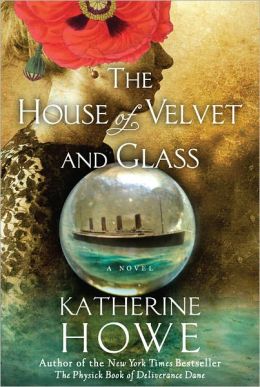
 The first book in this Micro-Review series is The House of Velvet and Glass by Katherine Howe.  Published in the spring of 2012, it is the second novel Ms. Howe has presented to the world.  The first was The Physick Book of Deliverance Dane, an intriguing novel spanning modern-day Harvard back to the Salem witch trials.  I read The House of Velvet and Glass because Deliverance Dane struck such a nice balance between historical fiction, contemporary coastal Massachusetts and a hint of magic woven throughout.  Her characters were genuine and driven to uncover the mysteries presented them.  Her descriptions were vivid - I particularly liked her description of the dilapidated house to which the main character returns and the mushrooms growing at the foot of the stairs.  The novel was warm with hints of good witches, a magic inheritance from mothers to daughters and long-lost diaries, an October story.

The House of Velvet and Glass also takes place in Boston - this time in 1915 after the Titanic disaster.  As Deliverance Dane was a story about witches and magic, Velvet and Glass is about sinking ships, opium dens and crystal balls.  I did not find it to be as "entrancing" as the jacket blurb says.  The main character Sibyl Allston is a spinster at twenty-seven, still suffering from the rejection of a suitor long ago and the deaths of her mother and sister on the Titanic.  Her brother has been expelled from Harvard for cavorting with an actress.  Her father is an old grizzled seafarer with a blue parrot.  Katherine Howe, it must be said is a consummate researcher.  To read Velvet and Glass is to transport yourself into the textures and the trappings of medium parlors, Back Bay mansions and opium smoke.  The surroundings are vivid... but perhaps too vivid because they tend to drown the characters out to types - they're good characters with some but not great depth. 

I couldn't get close to the characters.  Sibyl discovers that using a scrying glass in conjunction with opium use gives her powerful visions; her old flame - a psychologist - tries to protect her from it; her father battles his own addictions for similar reasons.  Sibyl strikes me as being a little too naive, while also being stubborn, which is irritating.  Her brother of course falls in love with a woman of indeterminate class.  Other rich ladies are snobbish.  It's 1915 and Sibyl doesn't know that the laudanum her father takes is an opiate and therefore addictive?  And - no doubt because I've watched Downton Abbey - I saw the story line of the Titanic connecting to the Great War almost immediately.  It was so predictable - although I cannot rule out the idea that this was somehow intentional - and the characters helpless to do much to change their fate... even if they can see the future.  I expected different, more dynamic choices on Sibyl's part.

I wonder if this is an example of Second Novel Syndrome, my term.  Having made a successful debut, the author is now under deadline for the second bestseller - continuing a brand of story.  Perhaps there isn't as much freedom to create and explore in this new novel; publishers and editors want a working outline, a synopsis of a novel that is still in the infant stages.  In order to meet deadline, the author must work to the outline.  I'm not saying this is true of Ms. Howe's experience, as I'm not in a position to ask her, but it is the sense I gather: to produce something fresh and in the same vein as Deliverance Dane but on a schedule. 

That said, The House of Velvet and Glass is a thoughtful and scholarly book.  Katherine Howe has painted a vivid picture of 1915 Boston - showing us how the mediums (charlatans) turned their tables, what the scientific minds at Harvard thought about visions of the future, and the inheritance of addiction.  There are beautiful moments and graces, fiery kisses and apparitions, a dance in the ballroom of a sinking ship.  Despite its flaws, it is a beautiful book.  It is not an epic but a slice of life, and it doesn't have to be more than that.

This review is actually about 500 words.  See what happens when you start small? 

Saturday, September 14, 2013

Nugget of Wisdom

One little nugget of wisdom I ran across today: Lev Grossman, Time magazine critic and author of The Magicians, is "stepping away from the vehicle," much in the way that Anne Lamott would say to get out of your story's way.  He explains in a current post on his blog.

Thursday, August 29, 2013

Through the Keyhole

"Hey, Jillian!" you exclaim.  "Where've you been?  You haven't written about anything since the garlic!  And you haven't changed the 'weekly quote' in weeks!"

"Around," I say, casually.  "Reading fabulous books.  Working on the first draft of a complicated novel.  Trying to get involved in an online writing group called Scribophile.  Disciplining a cat.  Ya know?"  

"Really?  Is that all?"

No, really.  I do feel at times that I'm galaxies away from Daedalus Notes, and it's hard to get back when so many other things are filling my head.  Such is the life of a writer: there never seems to be enough time or mental energy to give everything the attention it needs.  Sorry about that, readers!

Anyway.  

You know I've been waxing poetic about Anne Lamott's Bird By Bird lately.  I read it twice in a row.  I'll probably buy it so that I can read it a dozen more times.  She simply speaks my language - not just because she understands the plight of passionate but anxious writers, but because she has conveyed wisdom in helpful, beautiful little metaphors richly sprinkled throughout her book.  One little image to which I keep returning is that of the one-inch picture frame: this focus beyond the storm of self-doubts and distractions that plague her when she first sits down to write.  It is a starting point, a little assignment to stoke the fires, silence the doubts and carry on.  And I love it.  She says:

"It reminds me that all I have to do is write down as much as I can see through the one-inch picture frame.  This is all I have to bite off for the time being.  All I am going to do right now, for example, is write that one paragraph that sets the story in my hometown, in the late fifties, when the trains were still running..."(Bird By Bird, page 17-18.) 

This image has come back to me repeatedly in the last several weeks.  A one-inch picture frame is tiny, perhaps the size of a locket.  It only has so much room to stay something.  Either you'd have to write in tiny, infinitesmal print or choose your words carefully.  

And then I happened to wander into Michael's, which is usually where I find myself on a casual artist's date.  There is so much - I don't know - possibility in craft stores.  I've always been excited by scrapbooking papers and embellishments, special pens and the smell of new journals.  In the midst of my perusal of clearance and sale items, I happened across a little (cheap) 2-inch picture frame, as well as a stack of fun Victorian-esque craft papers: images of keys and sprockets, flowers, butterflies, old letters and turn-of-the-century lovers under an umbrella.  And... a little image of a fancy keyhole.  Something clicked in my head.  And this is the result:


The frame is roughly 2 inches by 2 inches, but the keyhole itself is roughly one inch, and even tinier in places.  I have it on my desk to remind me of the starting point, beginning with the scene glimpsed through this tiny opening... so tiny you have to press your eye to it.  (Pretending of course, that it's a real keyhole below a doorknob in some deliciously old fashioned house.)  Only one image can fit in that little space, only a few words of truth, but they will launch you nonetheless.

So my frame and Ms. Lamott's frame are a little different, but I feel we understand each other.  The frame isn't what really matters - this $2 plastic-pretending-to-be-copper frame and a little piece of cardstock - but being able to silence all the noise in one's head so that we can finally sit down and listen to our hearts.  Focus on the keyhole, the squint, the slats between the blinds and write what you see, however you see it!


See you around!


Saturday, August 3, 2013

A Discovery of Garlic

It is finally August.  The air is thick with late summer humidity, the drone of cicadas and crickets, the smell of lavender, thunder storms and dry grass; the sun is at its strongest, its most radiant.  I've been out tending to my bit of earth and weeding as much I can around the side of the house where the roses are riding out the heat.  I have what you might call a greenish thumb: gardens enchant me and I'd like to plan and sculpt and keep a garden someday when my situation is a little more permanent.  Until that day, I am enjoy the garden as a place of discovery and endless musing.  This is good exercise for the writer's brain.

One such discovery this week was that of wild garlic clusters growing up where the irises are situated on the south side of the house.  Granted, in the few years I've lived here I'd always wondered what those white pod-looking things were but always tore them out in an effort to maintain order and never once thought to compare the shape to the typical bulb you buy in the produce aisle... or put it my mouth and bite down.  I was thrilled when that taste burst across my tongue, and I instantly had the thought that if this was some post-apocalyptic world, a discovery of garlic might just be a gold mine.  I wonder what Katniss Everdeen would trade for wild garlic.

These little garlics aren't single bulbs, but a little bundle of tiny kernels - exactly the size of popping corn.


Wild garlic kernels bursting from their pouch.
This discovery sparked to life old memories of similar finds from childhood.  My parents had green thumbs and hands when I was growing up: vegetables from tomatoes to squash to accidental corn; and wide variety of roses, flowering bushes and our own little patch of annuals (bachelor's buttons, zinnias, marigolds) we little ones took pride in.  My parents would use mint and basil and chives from the garden, and once in a while when Dad was doing his autumn-time chipper-shredding, a wild onion would accidentally wind up in the chipping pile and get into his eyes.  Once, I found a little patch of wild strawberries once growing cozily alongside the roses.  I remember my little heart jumping for joy when I saw those little red berries - and they tasted so sweet - different from the ones you buy in the store. 

The little strawberries made me think of the wild blueberries my sister and I discovered behind our relatives' cottage in Maine.  The cottage was a rustic little house - no air conditioning, antique furniture, a tide clock (which impressed me; everything about coastal Maine, tide pools and sea creatures fascinates a child who grew up in Nebraska) and the smell of saltwater and sand.  I first tasted saltwater taffy in this place, and perhaps even my first lobster.  I remember scores of family members - sadly many, many of them gone - crowding into that house.  And then the blueberries.  We were told not to eat the berries, but we went out when no one was looking and gorged ourselves.  Mom must have noticed it smeared on our faces or something because she flipped out: she thought we were eating the poisonous red berries from the bushes that separated the cottage from the neighboring plot.  Until we were caught, it was heaven.  Years later, we returned for a visit to find the cottage torn down and replaced with a snazzier, fancier, air-conditioned house. The blueberries were gone.  It was almost as if I'd dreamt them.

I think it was the idea that you could grow food in your own backyard that thrilled me.  Your own berries!  Your own tomatoes!  Your own herbs!  My father's parents had two or three apple trees.  I remember helping to pick apples and put them in baskets, and how the baskets were shaped: bucket-like with wooden slats.  Gramma would make pies and applesauce.  And I have the strangest recollection of being told to be careful of worms.  Papa would peel the apples with a knife, which I thought was strange because Dad had a special apple-peeling device with a crank that seemed to make it so much easier.  When the apple trees died, we played on the empty stumps until they were finally pulled out.  Gone were our apple adventures and the climbing posts.  Gramma and Papa's yard seemed so empty without them.

This love of fruit and veg thriving in the garden is still alive in me.  I maintain tomatoes, peppers and beans with my roommate. We are constantly fighting the weedy grape vines (that WON'T die no matter what we do to them) that have been blocking the sunlight from the tomatoes, and the "volunteer" trees that grow between the fences.  But there is something fulfilling in tending to these plants, deciding what stays or goes (if it's a pretty weed, it can stay), and discovering wild lilies or garlic... or finding that the violas, once bunny salad, have finally grown back and have flowered magnificently.  There is no greater joy than that.  

Gardens must be tended, but it's amazing what can grow on its own unnoticed in the shade, in the random corner of the yard, around the cedar tree, behind the shed... without having to be coddled, pruned or yanked out by the roots.  Writing is this way, too.  Sometimes you have to let it grow wild and rampant in order to see just what's in it. 

Bunny salad no more: my violas are finally thriving.

Monday, July 29, 2013

Thoughts on Bird By Bird by Anne Lamott

Once in a while, I stumble upon a work of prose that turns out to be a breath of fresh air and a genuine comfort to me.  I've recently discovered Anne Lamott's Bird By Bird, subtitled "Some Instructions on Writing and Life."  If you've not read this wise and funny little book, I recommend it. 

Bird in hand
Bird in hand by jcandeli 

It is always a great relief to discover someone who has also struggled with writing anxiety and has learned to thrive in spite of it.  It's also a comfort to know that I'm not the only one plagued now and again by the strange terror of dying suddenly before I can fix things in my work-in-progress. Bird By Bird is very much a conversation between Ms. Lamott and her readers about the process and perseverance of the writing life with an electric sense of humor.  Most of what she has to say I'd absorbed before in writing classes and workshops, but it was oh so good to read it again in her voice.  "We are just going to take this bird by bird," she says (p 20), in other words step by step.

One ray of sunshine that she offers us is the concept of the "shitty first draft."  In fact, it's not a concept - it's a fact.  "All good writers write them.  This is how they end up with good second drafts and terrific third drafts... I know some very great writers, writers you love who write beautifully and have made a great deal of money and not one of them sits down routinely feeling wildly enthusiastic and confident. (p 21)"  I need to pin this to my board (or my forehead), because I have do have a wild tendency to fantasize about published writers and the apparent ease with which they "should" be working.  But art isn't easy.  It's really hard, and yet really good.

Perfectionism messes us up and keeps us from completing anything: "the voice of the oppressor, the enemy of the people.  It will keep you cramped and insane your whole life, and it is the main obstacle between you and your shitty first draft" (p 28). Lamott emphasizes the beauty of sheer effort, perseverance, writing for the sake of the story, silencing the voices in our heads that tend to lead us off course.  Trust your intuition - the creative, irrational part of you, she says, "but be careful: if your intuition says that your story sucks, make sure it's your intuition and not your mother. (113)" 

We should be focused on story and conveying truth through our characters, getting to know them instead of forcing them to conform to some preset notion of what a story is. The thing is, we won't know what the story will be, what will happen unless we follow our instincts and continue unconsciously down the path of discovery. Ms. Lamott reminds us that we shouldn't write solely for publication, but to write to give something back to others, to let something out of ourselves.  "I tell you, if what you have in mind is fame and fortune, publication is going to drive you crazy" (214.) In other words: aim for the joy of story, not publication.

The over all message from this book that I intercepted was that the rest of the world will think I'm crazy, but that's okay.  It struck me that I should be writing a wider variety of things - bits and bobs, journals, bloggings, stories - persevering in them and pushing back the road blocks to enjoying the writing life.  I do have days when sitting down to my awful first draft (or any draft, if we want to be honest) feels like climbing Mt. Everest in 4 inch heels with a broken toe.  I'll just take a couple of deep breaths, put the nagging overly-rational voices aside and tackle the story - whatever it is - bird by bird.  Thank you, Anne Lamott. If we should chance to meet sometime I will greet you with a big hug.  


Welcome

to a blog by three people who write, for anyone else who wants to write. It's a cruel world for creators, and here we promise support, whimsy, and curiosity that will hopefully keep your pen moving and keyboard tapping!

To read more about why Daedalus Notes exists, click
here.