Tuesday, May 20, 2014

Newsflash! Jillian Changes the Weekly Quote!

Just a bit of self-deprecation here.  I finally changed the weekly quote, which has been featuring Mr. Gaiman's wisdom for several months now.  

This one is from an article/blog post from NPR last week, that I've found to be strangely positive and encouraging.  It is written by Martha Woodruff on the Monkey See blog.  As a general rule, I tend to slip away from social media blogs and articles - the sort of things that are posted to Twitter and Facebook - because they toy with my anxiety.  This isn't advice, it's just thoughtful reflections from writers who, not too long ago, were in the same unpublished-but-wanting-to-be boat as I am now.  They're not saying "your novel isn't getting published because..." or "ten things lit agents hate..." They're just telling us all to hang in there.

One of my favorite parts is from Chad Harbach, whose debut novel The Art of Fielding was ten years in the writing.  He said, "There were many days and months when I figured I'd work on the novel for the rest of my life without finishing it."  I'm so glad to know I'm not the only who worries about this, too.  I'm glad to know there's hope in devoting oneself to a years-long project, especially if it takes years for the fruit to show.


Thursday, May 15, 2014

The Lamp Lighter

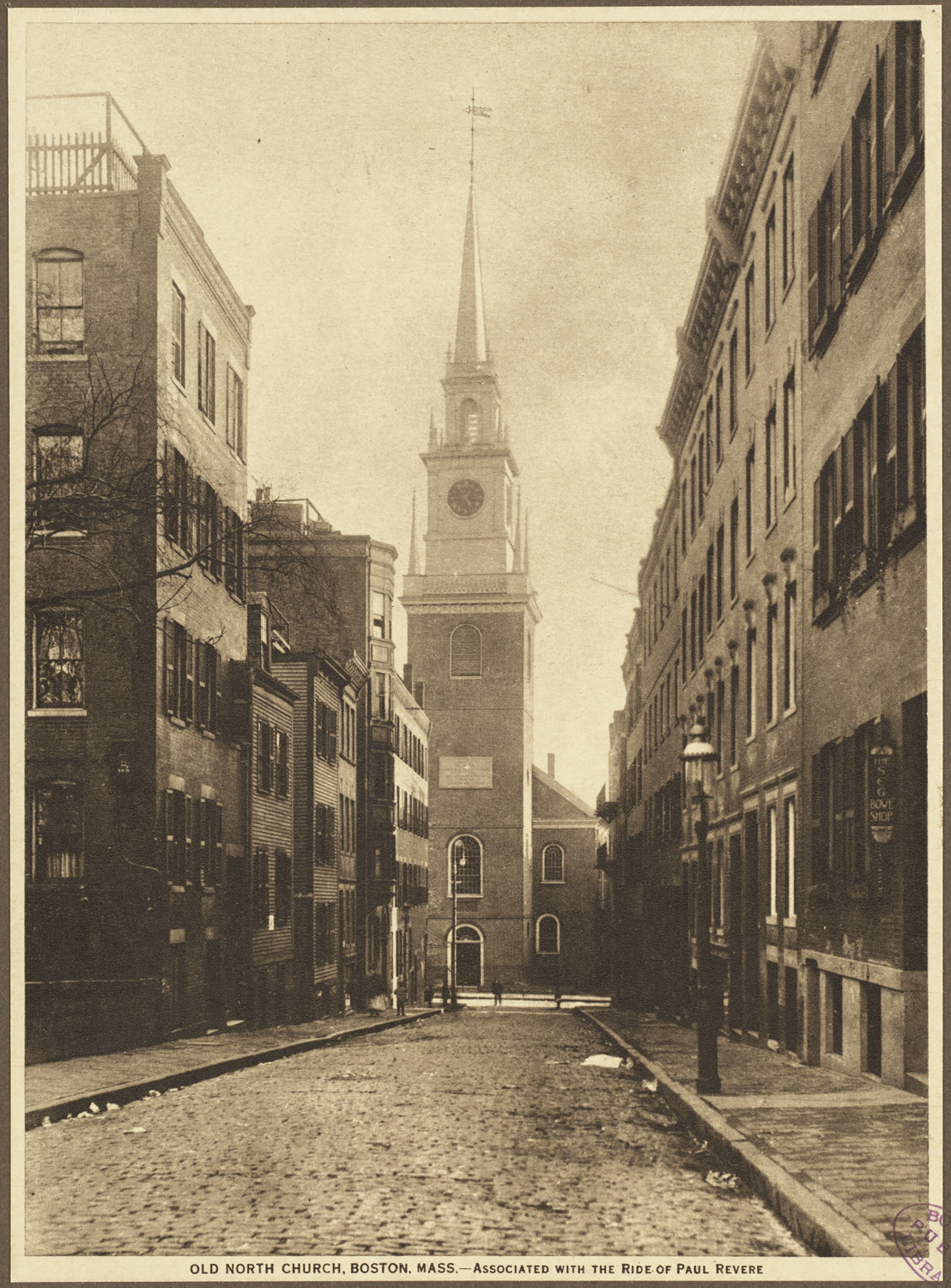
Growing up I remember having a vague confidence in my ancestors.  Vague because they were reduced to neat little facts in my mind, like one or two signs of visible fruit - apples or pears - on the family tree.  My mother had a copy of one branch of the family that her uncle compiled, a zigzagging course of names and dashes that had my name clear at the bottom.  I'd been told we could trace our family back to the 1500s somewhere in England, that we had ancestors on the Mayflower (possibly William Bradford himself), and that one of our forefathers lit the lantern in the Old North Church (Christ Church) in Boston on the night of Paul Revere's ride.

Vintage Photograph of Christ Church, or the Old North Church, in Boston, Salem St.
My mother has been delving more and more into our family histories of late, and has opened for me a compelling story about our lamp-lighter ancestors.  John Pulling Jr is my seventh great-grandfather.  He is indeed mentioned on the Old North Church websiteOn 18 April 1775, vestryman (a leading member of the church body) John Pulling and sexton (caretaker) Robert Newman hung lamps in the steeple window of the church to warn colonial citizens that the British were on their way to Lexington and Concord. Revere rode on across the harbor, spreading the word in person. H.W. Longfellow, who wrote the poem "The Midnight Ride of Paul Revere" honoring his ancestor, does not mention John Pulling.  If you look up the story on Wikipedia, the grand bastion of drive-through history, John Pulling is absent and the credit for lighting the lamps goes to Robert Newman. 

(As a side note, Michelle and I walked the Freedom Trail a few years ago and our Yankee-garbed guide gleefully told us that Revere was drunk that night.  I sincerely doubt this - it would be a gargantuan effort for a man to ride a horse through the dark, over the Boston Harbor while evading British troops and successfully warn the colonists for what would be the battle of Lexington in a state of intoxication.  The idea sullies the efforts of these men.) 

John Pulling Jr, a Mason and a merchant, was married to Sarah Thaxter McBean.  This was the second marriage for both.  She was first married to Duncan McBean, a landowner/businessman, who died shortly after their return voyage (presumably) from the Caribbean.  Their infant child also died on that journey.  John's had two children from his first marriage to Annis Lee, John and Annis. Together, John and Sarah had two more children, Martha and Sarah, called Sallie.  Sallie is my sixth great-grandmother. 

John and Sarah both strike me as strong, passionate people.  John, a vestryman (leading member of the church), was part of the Sons of Liberty with Revere.  On 16 December 1773, John was one of a group of men who, protesting the British tax on tea, went to Boston Harbor and threw an entire shipment of tea into the water - the incident was later dubbed the Boston Tea Party.  John Pulling stashed tea in secret compartments in his writing desk.  That desk has since gone to another branch of the family - but it most certainly does exist. 

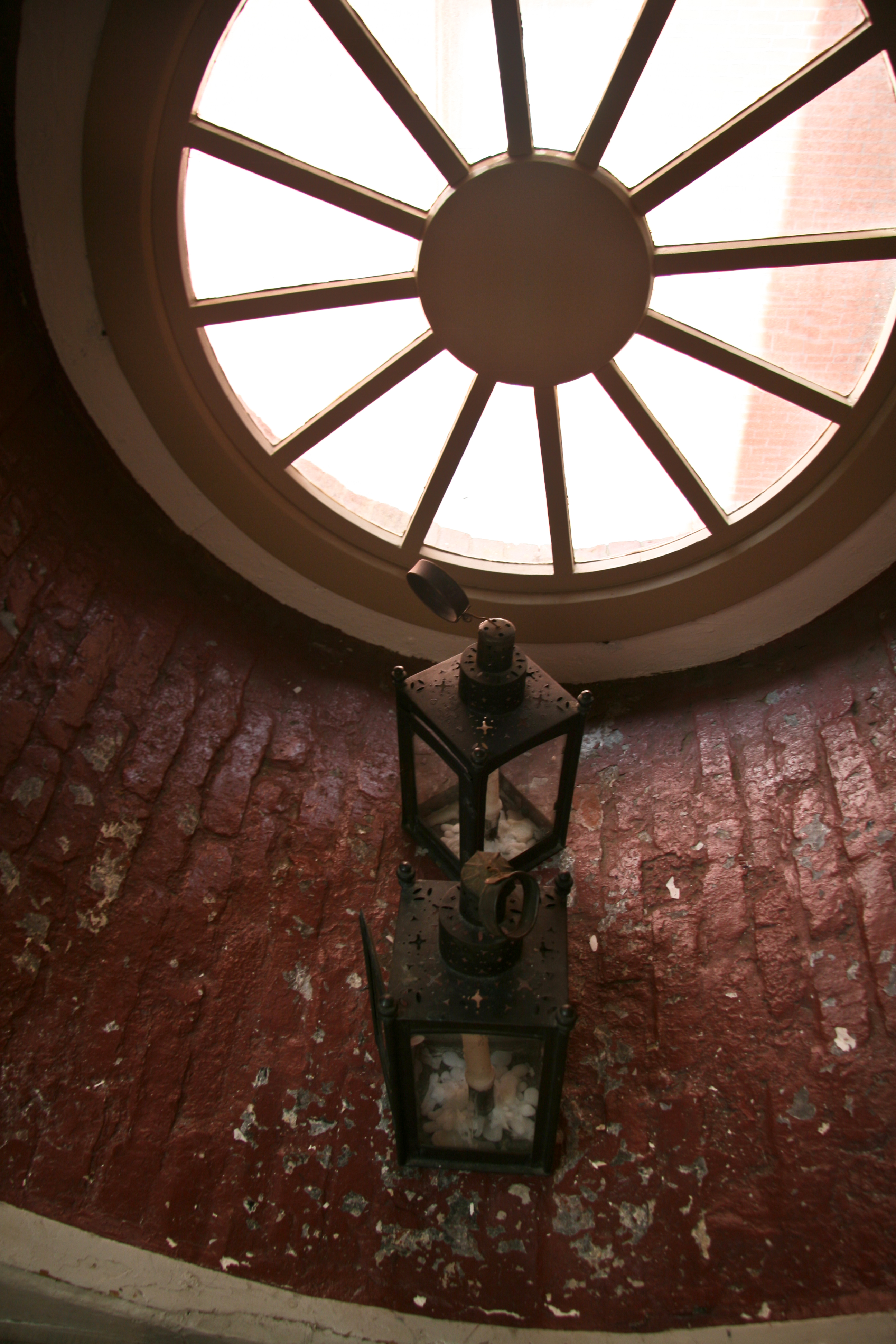
Paul Revere and his fellow Sons of Liberty were doing everything they could to thwart British advances by hiding munitions and arming themselves, as tensions grew and battles erupted in the colonies.  They had a simple code planned for a lantern-signal: one by land, and two by sea.  On this particularly night, the British troops moved faster than predicted, and Revere borrowed a horse and ran west to warn the colonists while Newman and Pulling ran up to the steeple and briefly flashed two lanterns in the window.  This alerted the colonists, but also alerted the British, who converged on Christ Church.  

The Old North Church looking toward Boston Harbor.  by Chris2fer

They apprehended Newman who had climbed out of a window.  During the subsequent - and no doubt unpleasant - interrogation, Newman gave up John Pulling's name.  Now indicated in the treasonous act, the British searched John's home, which was in the neighborhood but did not find him or his family.  John was actually hiding in a wine cask in the cellar.  Sarah, having sewn the family's silver and strips of tea into her petticoats to get it passed the British, had fled with the children to Cohasset, Mass. to hide in a cooper's shop (that's a maker of barrels and casks).  According to our sources, the shop was little more than a shack.  Sarah would later give Martha in this hiding place.

John, disguised as a fisherman, rowed a skiff to Nantasket (up the beach from Cohasset).  He joined Sarah and the children in Cohasset where they hid until the British left Boston later in the war. The family had fled with very little in the way of belongings, and had only each other.  John was never caught, but his life was changed.  A traitor to the Crown, his property was seized and he lived as a fugitive, in hiding and suffering, until his death nearly twelve years later.  He died at age 51 and is buried in Boston. 

After John Pulling died, Sarah took the children to live in the town of Abington. There Sallie would marry Isaac Reed.  Their daughter Lucy would eventually marry her second cousin, Jesse Reed.  To make the situation even more confusing, Sarah herself married (for the third time) another Thomas Reed, Isaac's father.  And the rest is history.  (My great-grandmother was a Reed who married a Poland.  My grandmother married a Pike.  My mother married a Boston.  From Sarah and Sallie on down we have a history of strong women in our family.  Not to cast all of my fathers and grandfathers aside...)

But it isn't "just" history.  I am connected to a family legacy - not of famous poems and bronze busts in museums, ballads and paintings and statues - of sacrifice and loyalty to family.  John Pulling Jr in every way exemplifies what it means to be an American and a Christian.  He committed treason; had he been caught, he most likely would have been executed.  Dying an early death, leaving his family destitute and exiled from home, is not a pretty story.  But what is beautiful about it is its plainness, its honesty, and its hope in something beyond the reach of the British Empire, beyond the grave. 

The next time I am in Boston, I will definitely visit the Old North Church, find the pew that bears my great-great-great-great-great-great-great grandfather's name (if there is one), and thank him for being there all those years ago to strike a match and light a lantern, knowing full well what would happen next.  I can only imagine what that felt like.

Old North Church #3 by Tim Sackton

Thursday, April 17, 2014

Rebecca Again


As spring comes on, I find myself revisiting my favorite novels.  It is the mark of a good, excellent, even masterful novel, if they call to us even after we've read them, to come back and explore a story all over again, discover new nooks and crannies and the secrets buried in them.  Spring began with Jane Eyre (Charlotte Bronte), I Capture the Castle (Dodie Smith) and Rebecca (Daphne Du Maurier) - reviving a spirit of the classic, ageless stories that have inspired, compelled or comforted me in my work.
http://butterybooks.com/wp-content/uploads/Rebecca-by-Daphne-du-Maurier1-355x535.jpg

I just finished Rebecca for the second time.  It is the newest of the three to my experience.  Jane has been with me since high school.  And Cassandra (I Capture the Castle) just after I graduated college.  An article on NPR stirred up an interest in Rebecca, and here I am, reading her again.  A few weeks ago I'd made up my mind that Rebecca was one novel I should have in my collection - I needed it in that odd, frenzied writerly way.  I know I will come back to it in the future time and time again.  I wanted it with me ready to be taken down and studied, just as Jane Eyre and I Capture the Castle are.

Rebecca's opening line is famous and ghost-like "Last night I dreamt I went to Manderley again." It is more deeply psychological, sitting in the heart of the young (and nameless) Mrs. de Winter's story and looking out on the traces left of her husband's first wife.  The narrator's experience colors so much of the novel - her suspense is our suspense.  When she is shaken, we are shaken.  I could write paragraphs upon paragraphs of how Rebecca draws on Jane, how they're similar, how each is its own unique work of art, but perhaps in another post.  For the moment, I am quite content to bask in the sunshine and the shadows of these two works... a house of secrets, a wife's hidden nature, a husband's torment, a second marriage threatened, a haunting sadness, a love of place and nature, hauntings of the living and the dead. 

I love Ms. Du Maurier's attention to detail - how those details paint character as well as scene.  In the beginning of the tale she introduces the narrator's employer Mrs. Van Hopper thus:

... how different my present companion, his steady, well-shaped hands peeling a mandarin in quiet, methodical fashion, looking up now and again from his task to smile at me, compared to Mrs. Van Hopper, her fat bejeweled fingers questing a plate heaped high with ravioli, her eyes darting suspiciously from her plate to mine for fear I should have made the better choice... (p 10)

Rebecca herself is dead, but she's alive in the imagination of Mrs. de Winter, eclipsing her, overpowering her from beyond the grave:

I must have been the first person to put on that mackintosh since the handkerchief was used.  She who had worn the coat then was tall, slim, broader than I about the shoulders, for I had found it big and over-long, and the sleeves had come below my wrists.  Some of the buttons were missing.  She had not bothered to do it up... There was a pink mark upon the handkerchief.  The mark of lipstick.  She had rubbed her lips with the handkerchief, and then rolled it in a ball, and left it in the pocket. I wiped by fingers with the handkerchief, and as I did so I noticed that a dull scent clung about it still.  (p 120)

Her description of Mrs. Danvers, the housekeeper:

Someone advanced from the sea of faces, someone tall and gaunt, dressed in deep black, whose prominent cheek-bones and great, hollow eyes gave her a skull's face, parchment-white, set on a skeleton's frame. (p 67)  

I could go on and on and on, but then my thoughts on Rebecca would be as long, or even longer, than the book itself.  It is a masterpiece because every word, every detail is carefully placed for the best affect - the subtlest, most stirring metaphors. The very novel is alive - gorgeously reflective of Manderley itself: a grand old house, well-kept and beautiful but unable to contain the wild spirit stirring at its heart.

You should read Rebecca...

... if you love Jane Eyre.  Don't compare them seriously (as to which is the "better" because they're both very different) - just enjoy their similar shades of story
... to catch a glimpse of the restless Cornish sea
... for a compelling, page-turning mystery wrought with lingering grief and silent rage
... for mouthwatering descriptions of food and gardens you can almost smell... the azaleas! the roses!

Thursday, March 6, 2014

Worthy Read: The Magicians & The Magician King by Lev Grossman

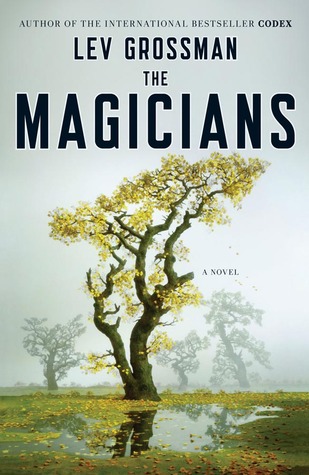
Here's a worthy read that has been on my mind lately: Lev Grossman's The Magicians and the sequel, The Magician King.  The third novel is due out this summer.  

 6101718

Lev Grossman has created a world both familiar and fresh.  The novel is, of course, about magic - but only like Harry Potter in the most shadowy sense.  Instead of a boarding school for young wizards, these are decidedly adult novels - complete with salty language that would make Ron Weasley blush - about a young man named Quentin Coldwater who is admitted to an obscure American college called Brakebills to hone his magical skills.  The funny name is where the similarity to Hogwarts ends.   Quentin is a bit of a nerd, obsessed since childhood with the Narnia-like books of children's adventures set in a magical land called Fillory.  When he finds himself at Brakebills, he realizes that living in a magical world doesn't suddenly make things easier or better.  Like any kid in college, he makes new friends, falls in love, and makes a ton of mistakes - some arrogant, some innocent, some reckless.  Quentin's journey I find is so true to the post-college experience - that what we learn in class or inside the college walls with our friends cannot ever fully prepare you for the real world.  It is even more true for a magically dangerous world.  So even when Quentin and his friends do finally stumble upon Fillory, it isn't the paradise that he always imagined.  In fact, it might be more sinister than he handle.  

 10079321

The Magician King is a powerful sequel, broaching the question of what happens after one has become king over a magical land.  Fillory has lost its potency, and we slowly learn the story of Quentin's bitter and emotionally scarred friend Julia, who was rejected by Brakebills and fought and suffered tremendously to learn magic on her own.  Quentin is still coping with the horrors he encountered in the first novel - of disappointments with Fillory, of needing to find out who he is in this aftermath.  The Magician King is about the consequences of living a magical life and whether it is worth the sacrifice.

You should read The Magicians and The Magician King
       ... if you enjoy crisp, sarcastic and hilarious prose.  
       ... if you're search for a fresh, original and terrifying story.
       ... if you want a story with vivid individuals for characters, none of them perfect, but (irritatingly) human  and heart-breaking.
       ... if you have trouble letting go of Narnia, Neverland or Middle Earth. 

But, to harken back to Reading Rainbow, you don't have to take my word for it.

Thursday, February 13, 2014

Winter Seeds in Querying Season

On Writing - dolce memole

 As you know this is a query season for me.  It happens to have coincided with the gloom of winter and the post-Christmas blues, a homecoming from a wonderful trip to England and moving my life from a house I shared with roommates to a small downtown apartment.  As you can see, I had plenty of excuses to hold it off until now... but the biggest excuse, and probably the most reasonable, was the condition of my query letter.  It sucked.  I could not stomach looking at it.  It was pretty but a rambling mess of words, an imitation book jacket not a query.  

(Wait.  Isn't a query supposed to be like a book jacket?  Not exactly.  Shorter than a book jacket.  Very short.  Three paragraphs tops, people, and no more than 300 words to demonstrate your ability to work with Less.  Not three paragraphs for the book and two for an intro and a wrap-up.  One paragraph to tell an agent why you're querying them.  One hook paragraph for the novel.  Third paragraph to give "credentials" or writing credits.  That's all she wrote.  Literally.)

It took about a month of chiseling away at the query and the even uglier synopsis.  With Michelle's coaching, something promising emerged.  I researched a handful of agents and sent out the first three last week.  I braced myself for a round of form-rejections like before saying, "Thanks but no thanks," or "your novel is just not right for us" etc. The same day I got what I'd been praying for over the last year: just one personalized response from an agent.  

It was not a yes, mind, but a paragraph or two of some really helpful insights into the story I am building.  I was not necessarily looking for a "yes", anyway, but some sort of confirmation that my novel isn't crap, that it has a future apart from a query slush pile.  And here it was.  It was not "yes" but it was helpful, friendly, and encouraging. 

What the agent said was (paraphrased), "Awesome idea - but... here's what I was hoping to see..."  In other words, here's how I could possibly make it better. I know it could be better.

First of all, she saw the story (despite its flaws) from a query, a synopsis and 25 pages.  She was convinced the novel could be More.  I still need to work on "showing" rather than "telling", particularly when it comes to setting and how it shapes the world in which my characters' lives unfold.  (Honestly, that's something I know I'll always be working on.) The problem isn't the space I'm trying to build, but my tendency to reveal details and nuances in dialogue.  Third, my characters should be allowed to flourish (her word) even more.  I was beyond excited when she recognized their connection... I thought, "someone who understands..."  

This response was an indication that, at least for now, I am headed in the right direction.  Not only have I crafted a stronger, more professional query letter and synopsis (Thank you again, Michelle!) but I have a plan to make the writing itself - the meat of my novel - stronger, too.  I know Waterwill will be a fluid thing for years until its published. (Okay, if it's published.  But I like optimism.)  The next draft will be about vivifying the setting and the characters' personalities and relationships, as well as paying very close attention to the balance of dialogue and exposition.  

I know she is not my agent, and I won't presume that she'll leap on it if I send her materials a second time.  Yet this experience has given me hope that someone will find and connect with Waterwill further down the line.  I have hope that my novel, while still not quite "there," is closer than ever to where it needs to be.

That said, I've been marking up my drafts with vivifying and show-don't-tell ideas.  For now, I'll hold off querying other agents on my list because, frankly, I want to give out my very best.  I'm excited to be able to strive for it, to have a direction.  Excited.  Encouraged.  Increasing momentum.  I might have a different perspective on that in a month or two, but for now everything feels right - even if I'm still in the same place, between queries, agentless.  

It may still be winter, but remember that seeds are sewn in the wintertime.  Roots dig deeper.  On the surface it may appear that the world is resting, but life is flourishing beneath the snow of Querying Season.

snow days by madeline gibson

Wednesday, February 5, 2014

Long Time No See!

It may seem quiet here on the blog, but it's been a busy, busy couple of months for me.  Ideas for posts occasionally circle my brain, only to be swept away by something more immediate or exciting.  But there's good news: the year is still fresh, and my energy is getting back to where it was.

Timeline of Events:

28 November - Thanksgiving
29 November - Jillian gets on a plane bound for the UK
30 November - Jillian and Michelle are reunited in Oxford and a ten-day visit begins.
30 November to 9 December - Jillian and Michelle spend time hanging out at coffee shops (particularly Cafe Nero at Blackwells) reacquainting ourselves with our old haunts, watching Chuck, Farscape, Haven & Doctor Who, going to pantos, taking walks, writing, Christmas shopping (the glorious Scriptum on Turl Street), taking cold medicine, etc.

Highlight, 6 December - Jillian goes to London by herself as she unwittingly gave Michelle a cold.  Visited St. Paul's Cathedral and the Tower, navigating the London Underground solo.  Not a small feat for one born and raised in a Midwestern state that has no subway system.

9 & 10 December - the weary traveler makes it back to Nebraska and drives from Omaha back to Lincoln.
11 December - Jillian's car battery decides it doesn't like the frigid weather and promptly dies in the driveway.

Highlight - Jillian starts looking for a new apartment for herself and Ninja the cat.

25 December - Christmas.
6 January 2014 - Jillian finds a lovely little place with a view of Nebraska's capital. 
18 - 21 January - Jillian and Ninja move house.  Ninja puts up a fight characteristic of, well, a highly skilled ninja.  

Since then, it's been a matter of unpacking, rearranging, realizing what kitchen utensils I need, what furniture is still in limbo, getting a cat to adapt to new surroundings without a basement to throw her into.  All the while I've been painfully aware that I've not sent queries out for my novel in a long time, and that I need to get that particular wheel moving again.  

Perhaps it's just taken this long to regain my strength, my mental resolve, and keep at bay all of those doubts and devil voices that like to me that querying is useless, that my novel is crap, that I don't have a strong presence online anyway so why bother.  When you're anxious person, this is the reality, and it's just not helpful.  It drives you away from your everyday writing, the heart-stories and creative activities that define your day, your sense of self.  I don't want to give it up or shrink away so easily this year.

I want this year to be about forging ahead and hesitating less.  Call it a resolution if you will - or perhaps solemn goal is a better term.  Whatever it is, querying is one of those stages in the life of a book that can't be bypassed or jumped over or TARDIS-ed into oblivion.  No, the Doctor isn't going to pull me out of this one.  I have to do it myself.  

So I sent three queries this morning.  At the very least, I hope I'm continuing to learn something about this process, to think of this as a project and an opportunity and a leap of faith.  I am simply starting down the corridor again, and knocking on the doors.  Some day one of them will open.


open doors by kuronakko

Tuesday, December 24, 2013

A Spritz Christmas

When I was little, I came into a cookie tradition.  My parents were critical care and intensive care nurses who balanced their schedules so that someone was always home with their little girls.  Cookie-making was a way for keeping us busy.  And Christmas, of course, is the Season for Cookies. 


Every family has its special staple cookie - the one that has to be made each year in the same fashion because it won't be made at any other time of the year.  Cookies were an escape, a wonderful, creative distraction from the terrible weather, wet or dry, that characterizes Nebraska's bleak winters, mid- and late.  Without cookies, I somehow believed, Christmas wouldn't really come.

We made spritz cookies and almond bark-pretzel-m&ms cookies. The latter isn't really a cookie, but they were special.  Circle pretzels, with almond bark poured in and red and green M&Ms in the middle.  Before I was old enough to melt the almond bark myself, I remember watching Mom or Dad pour it into pretzels - there was something magic in watching the white sugary stuff fall from the spoon - pure liquid white.  As a child with a particular penchant for all things sugar and chocolate, this was a beautiful ceremony.  Still is, actually.

We did not make sugar cookies often.  I know we had the cookie cutters - stars and Santa Claus and Christmas trees - but they sat in a jumble in the kitchen drawer while Mom got out the old spritz cookie press and made a dough of flour and sugar and butter (three sticks), vanilla and almond extract: the aroma of the season.  I still have the old press.  Most of the parts are metal, and the thing is most likely twenty-five years old or older.  It's finicky, and falls apart easily.  I have a brand new plastic press that works like a dream, the latest in cookie press technology, but... 

"Haven't you thrown that old thing out yet?" Mom will probably ask when I visit for Christmas.  Well, no.  So much of my childhood is wrapped around this device, so many hours of watching her labor over a cookie sheet, pulling deformed blobs of proto-cookie off the sheet and begrudgingly throwing it back into the dough bowl.  She'd work until the pan was full of trees and stars and wreaths. Then my sister and I would descend with the colored sugar and the red-hots.  The old press doesn't make the cookies easy, but it did make it Christmas.  In the days when I imagined Santa dropping into our mantle-less house (we did have a chimney, but no fireplace), we always made sure there were spritz cookies waiting for him.


The don't make them like they used to.  
 
I'm thinking that this box might make an awesome handmade cover for a cook book.


 Mom eventually stopped making the spritz cookies.  You can't really blame her.  They're difficult to make and time consuming.  They're mostly butter and sugar, and are small enough that a handful are eaten at a time - the antithesis of a healthy diet.  But.  It's Christmas.

The spritz cookies would always ALWAYS go into the same blue tin.  Every year.  My parents tried to get rid of it years ago, but I took it with me because... well, my mouth waters and I sniff for that almond extract and vanilla smell every time I lay eyes on it.  Rest assured it has been washed several times since the '90s, but it is still "the" tin.  I was a kid listening to Grampy's Christmas tape, Julie Andrews was singing "Jingle Bells", and there was spritz cookie dough in my mouth (ah, the BEST dough EVER) and imagining the horse was really pulling that sleigh all the way around the tin.


What I appreciate about the cookies now is how easy they are to freeze and to give as gifts.  They go great with tea.  They're pretty and colorful without a thick smothering of icing.  They're bite sized (in some cases).  They smell heavenly.  Even as I make them now, I feel like that little kid aching for a taste of the dough, eager to mold it in my hands.  There is nothing quite like spritz cookie dough getting soft and buttery between in the fingers.  And as a writer, I find I need to cookie - do something purely tactile and savory - to get my brain working.  Kneading bread dough, chopping potatoes, simmering wine, decorating cookies so that they look like snowflakes - it all creates room in the brain for those stories to grow, to simmer.

The best Christmas gifts involve food and drink and sharing it with others.  Back in September I thought I should write stories and give them to people this Christmas.  That didn't happen.  Little stories aren't easy for me, and with the double stress of a trip to England in the first part of the month and a move sometime in the near future I turned to the simpler plan of cookies and puddings.  I'm glad I did.  These treats help us face the long dark of another winter of resolutions failed and met, of more snow and shivering and dying car batteries.

This winter I'll be back to getting those query letters out to potential agents.  I'll be looking for my first solo apartment.  I'll be writing a sequel to my novel and dabbling in the revamp of another.  I'll also have a few spritz with my tea, while my supply lasts.

And who knows?  I might make more for St Valentine's Day.


Welcome

to a blog by three people who write, for anyone else who wants to write. It's a cruel world for creators, and here we promise support, whimsy, and curiosity that will hopefully keep your pen moving and keyboard tapping!

To read more about why Daedalus Notes exists, click
here.