Thursday, March 21, 2013

Wisdom from Oscar Wilde

The Telegraph yesterday featured an article on a recently discovered letter that Oscar Wilde wrote to a would-be writer around 1890.  It felt like he was speaking to me from the dawn of the last century:

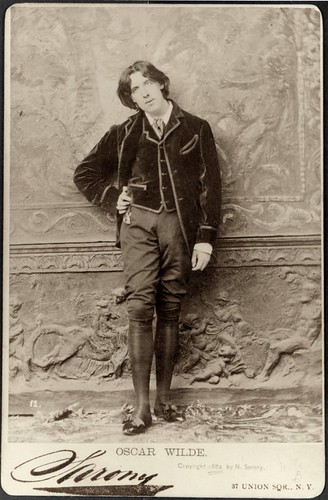
Oscar Wilde

"The best work in literature is always done by those who do not depend on it for their daily bread, and the highest form of literature, Poetry, brings no wealth to the singer... Make some sacrifice for your art and you will be repaid but ask of art to sacrifice itself for you and a bitter disappointment may come to you."

To me this sounds like: "so you're a novelist who earns her living as a receptionist? Excellent!  You're able to let your art remain art!  I know you dream of one day earning your living by your novels, but it might not be as rosy as you think.  Until then, use this time to grow as a writer and a student of language and see where it takes you.  You might go farther than you think."  Thank you, Mr. Wilde.

***

In a similar vein, author Matt Haig also had thirty pieces of encouraging wisdom to share via the Telegraph. My favorites were:

  • Being published doesn't make you happy.  It just swaps your old neuroses for new ones.
  • Success depends on great words and passionate people.  The words are up to you.  The people you have to pray for, and stand by them once you have them.
  • Beauty breeds beauty, truth triggers truth.  The cure for writer's block is therefore to read.

Risible

Adventures in Logophilia, Day 190:

risible

having the ability or power of laughing; ludicrously funny.  Something that incites or triggers laughter.  Something worthy of laughter.  That strange moment when you feel like your life has suddenly transformed into a sitcom worthy of Seinfeld or The Office.  Happens to me all the time - if you cannot find a way to laugh in the middle of a stressful day, you'll be crying. It also makes for great comedic material.  And if you're as walking-into-walls clumsy as I am, well, there are plenty of opportunities!

laugh
laugh by matteo procopio

Wednesday, March 20, 2013

Thole

Adventures in Logophilia, Day 190:

thole

This word is in my lexicon because I like unusual, archaic things.  If you're an American, like myself, you've probably not heard or seen this word outside of classic British literature.  Thole is Scottish verb meaning to endure (a thing) without complaint, to tolerate something unpleasant or difficult.  

I am in this unknown period that is seeking an agent.  I probably will be for some time.  The process has been overwhelming and far from easy.  When you send what you assume to be your best impression of your novel (in the query) and no one shows any interest in it whatsoever, it cuts you deep to your soul.  No matter how many times you can defend the agents for their difficult job sorting through a slush pile of queries, you cannot help but feel yourself lose energy, lose faith in yourself, and begin to doubt the merit of your writing.  It simply is the way of things.  I felt this in the days when I was hoping for graduate school; rejections felt like a door slamming in my face.  

But... as much as it hurts now,  there will be a door somewhere in this long corridor of agents that will be open, and will someday stay opened.  Until then, my job is to rewrite my query letter (many times if necessary), to listen to feed back about weak spots in the novel's plot, to do what I can to stay moving.  It's non-specific stuff.  It feels half the time like I am not doing anything useful at all.  But I'm going to thole it anyway.  There is always hope - with each draft, with each nugget of wisdom from colleagues out there in the world.  If I didn't believe my novel was something beautiful I wanted desperately to share with the world, I wouldn't be here.  I'd have given up long ago.

climbing
climbing by sara kallado

Tuesday, March 19, 2013

Hub

Adventures in Logophilia, Day 189:

hub

A hub is the center part of a wheel, rotating on or with the axle, the spokes radiating outward from it.  From this object comes the over-arching macrocosm: the effective, productive, bustling center of an activity, a network or particular region.  Example: New York City is often described as the hub for the publishing industry - so it is no wonder that so many (though definitely not all) literary agents operate from such a place.

The Wheel [77%]
The London Eye by Brian Robertson

Monday, March 18, 2013

Bajiggity

Adventures in Logophilia, Day 188:

bajiggity

You may not have heard this word before because I first heard it from my mother, who invented it.  You can imagine it took me a while to figure out the proper spelling of this word. Bajiggity is one of those words you find yourself saying to describe a feeling or a state of being that no "real" word can accurately describe.  Bajiggity is an adjective in the vein of "going berserk," describing (as far as I'm concerned) a state of agitation or hyperactivity brought on by excessive caffeine, stress, adrenaline, or related anxiety issues. This is pronounced ba-JIG-ity.

My mother says: "The definition is unknown, but we all know what it means."

Dizzy
by Samantha T

You might say I'm bajiggity because filming for Sherlock Series 3 begins today.  My cat is usually bajiggity in the evenings, when her nocturnal senses are piqued and she wants to play (using her teeth, of course), resulting in the occasional hippity (another word from Mom), or jaunty little skip. 

Ombrifuge etc

Adventures in Logophilia, Day 187:

ombrifuge

Anything that provides shelter from the rain - from an enclosed porch to an umbrella to a gazebo.  Any word beginning with ombro- will relate to rain, as ombros is the Greek word for rain shower.  On this note, one of my other favorite rain words is ombrogenous which describes a bog or that icky stuff called peat which depends on large amounts of rain in order to form.  Spring is by nature ombrogenous

Rain,rain and more rain........

rain in scotland by Nicolas Valentin

Saturday, March 16, 2013

Neverwhere on BBC4

I have just finished listening to the BBC Radio production of Neil Gaiman's Neverwhere.  It is exciting to hear one of my favorite novels transformed into such drama; nothing unlocks inspiration quite like hearing a story unfold, and letting the visuals come to life inside the imagination.  Neverwhere, though it has its short-comings, is one of the richest worlds ever created... from the streets of London Above to the sewers Below, to conversations with rat lords and the bustle and chatter and chaos of the floating market.  It has its own rules, legends, and dangers.  The first episode made for an excellent, transporting hour that I was sad to see (or rather, hear) end. 
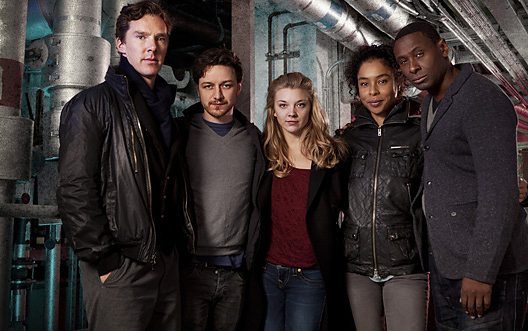
Episodes will be broadcast in 30 minute episodes this week through Friday, and then they will be available until the end of March.  Neverwhere features the voice talents of James McAvoy, Benedict Cumberbatch, Christopher Lee, Bernard Cribbins, David Harewood, Sophie Okondeo and Natalie Dormer.  Visit Mr. Gaiman's blog for a fun cast photo.
About Neverwhere
Click on this cast photo for a link to the program website!

Trust me - you want to make yourself an artist date and lose yourself in London Below this week!

Whirligig

Adventures in Logophilia, Day 186:

whirligig

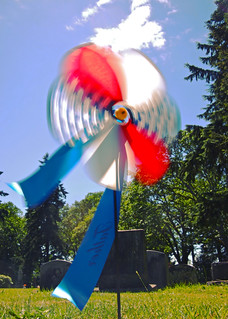
This is a child's toy that operates in a whirling motion, like a pinwheel, a weathervane or the seed pod from a maple tree blown by the wind.  More generally this means one that continuously whirls or changes or is constantly in motion.  A whirligig more universally can describe a whirling or circling course of events, particularly those out of our control.  This describes my writing life 80% of the time.

As the whirligig whirls


Friday, March 15, 2013

Doff

Adventures in Logophilia, Day 185:

doff

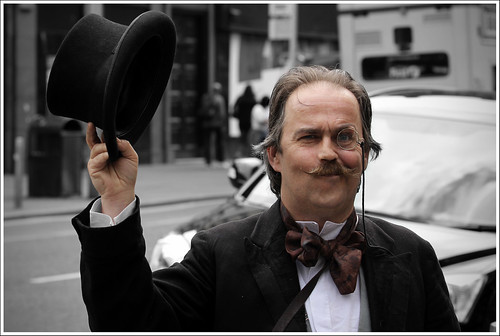
To remove an article of wear (clothing: jacket, hat etc) from the body - taking off ones hat as a sign of respect.  In a more general sense it means to rid oneself of something or put it aside.  Think of Mr. Darcy taking off his hat to Lizzie Bennet.


Top Hat
British gentleman doffing his hat by Alistair

Thursday, March 14, 2013

Panache

Adventures in Logophilia, Day 184:

panache

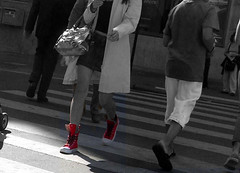
A dash of individual flamboyance and style in one's actions or creations; a flash of distinct personality, i.e. writing style and voice, a pair of red shoes with a grey dress. This came into English from French and Italian versions of the Latin word pinnaculum, which means "little feather" referring to the ornamental feathers and tufts worn on the helmets of soldiers, perhaps Roman soldiers.  What does your panache look like? 

Red Shoes
malias gideon on flickr

Wednesday, March 13, 2013

Jejune

Adventures in Logophilia, Day 183:

jejune

This adjective describes something that is lacking in any sort of nutritive value, or (aside from food) without significance or interest, or something that is generally simplistic, naive or superficially rendered.  This is from the Latin jejunus, meaning "barren or fasting".  Somewhere along the line this came to mean "not intellectually nourishing." (Oxford Dictionaries)

It's important to be conscious of how we're feeding ourselves intellectually, because that will feed into the writing we produce.  The things we read - from novels to newspaper articles to tweets - can either amount to tons of cake or a bowl of highly nutritious blueberries.  Too much television is comparable to a surfeit of caffeine. Are we going for the superficial and the sugary or the vitamins and antioxidants?  Are we learning?  Or are we merely being entertained?  Are we energized or left feeling tired?  Believe me, I struggle with these things all the time.

Blueberries
Blueberries are better than cake.

I've learned that staying intellectually healthy may include:

  • Not letting Twitter run your writing life.
  • Reading "new" things - books and stories outside of the comfort zone, whatever that may mean.
  • Getting off the internet (ahem, Pinterest) and the computer and basking in some quiet time.
  • Taking walks without the aid of an iPod soundtrack.
  • Reducing caffeine intake.  
  • Keeping a journal and writing by hand (to maintain tactile connections between the act of writing and the connections made in the brain).
  • Watching television sparingly.  I don't believe that television is completely bad for us, because it is an alternate form of storytelling... although I find it is not very helpful on terms of craft.  Nothing clears the brain faster after a stressful day than losing oneself in an episode or two of something that makes me wonder about life.
  • Getting out of the chair.  We tend to work best planted in a sedentary fashion - there really is no way around that.  But getting up and moving around pushes blood into the brain and keeps us thinking.  Do it!
  • Sleep!

Tuesday, March 12, 2013

Microcosm

Adventures in Logophilia, Day 182:

microcosm

A little world, especially: the human race or human nature seen as an epitome of the world at large or the universe.  Generally, a microcosm is a small community or other unity that in some way mirrors a larger society.  I prefer focusing on microcosms rather than macrocosms.  The microcosm is the immediate setting, the macrocosm would be the era, the year and the country (or planet) in which the story unfolds. 

Snow Globe Church
snow globe = microcosm

Monday, March 11, 2013

Volant

Adventures in Logophilia, Day 181:

volant

This adjective means having the wings extended as if in flight, like a heraldic bird; generally used to describe something flying or capable of flight, or simply quick and nimble - metaphorically, moving as if flying.  This is from the Latin verb volare, to fly.


Juvenile Least Tern in Flight
juvenile least tern in flight by mike forsman

Sunday, March 10, 2013

Blackthorn Winter

Adventures in Logophilia, Day 180:

blackthorn winter

Generally, a blackthorn winter is a spell of cold weather at the time of early spring when the blackthorn trees are in bloom.  Though it is not officially spring, we are right on the cusp.  March is that odd time of year when anything can happen with the weather.  Yesterday, temperatures climbed to 60 degrees and I took a breezy walk in the sunshine.  It was warm enough that I had to take off my sweater.  Spring was definitely in the air.  Then, this morning I woke up to discover a world transformed from muddy, nascent spring to blustery, white winter.  The robins seem mightily confused.  But this is a good omen, methinks, for a wet spring and a greener summer to follow.

Crocus in the Snow
snow crocus by corbeau du nord
 

Saturday, March 9, 2013

Sprite

Adventures in Logophilia, Day 179:

sprite

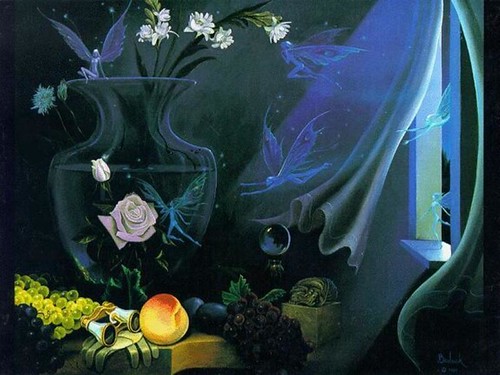
A sprite is an elf or a fairy, an Middle English warp of the word spirit.  The word has also come to refer to flashes of red light in the atmosphere during thunderstorms as electrons clash with other high-energy molecules.  This is related to spright, an alternative spelling.  Someone who is described as sprightly is spirited, vivacious and cheerful lightness about them.  I find March to be quite sprightly, delightfully so after another (inevitably) gray February.

faeries-managerie

Friday, March 8, 2013

Adumbrate

Adventures in Logophilia, Day 178:

adumbrate

to give off a faint shadow or slight representation of something.  In writing, this is an outline we write out for ourselves to guide the way through a novel, and also the technique of foreshadowing events to come.  This is an art - the ability to intimate by overshadowing, to shed light on other things by putting all the distractions in shadow, to draw what's important out into the light.  A little meta, no?

shadow on the wall

Thursday, March 7, 2013

Coif

Adventures in Logophilia, Day 177:

coif

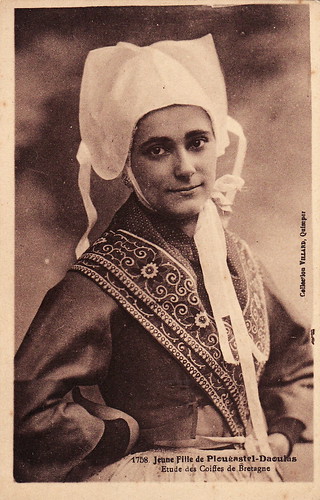
Breton coif: Plougastel-Daoulas (near Brest)
A girl from Breton (France) wearing a traditional coif.
James Holland.

A coif is a woman's close-fitting cap, now only worn by nuns underneath their veils.  It was also the term for the skullcap men would wear with their armor in battle.  In America, coif is short for coiffure, which means one's particular hairstyle.  

Coifs in general fascinate me.  I went through phases as a kid where I wore a knitted beret over my hair most of the time - not just because I was trying to grow my hair out and thought it looked gross, but because the hat looked cool.  And, you know, it did have the shape of one of those coifs worn by the kitchen staff in Downton Abbey

Wednesday, March 6, 2013

Folly

Adventures in Logophilia, Day 176:

folly

Folly is the lack of good sense, understanding or adequate foresight; an act of foolishness, or more specifically, a costly undertaking which results in embarrassing or ludicrous ruin.  This word is Middle English, which means it was borrowed from the Old French word folie, meaning "madness." (Oxford Dictionaries.)

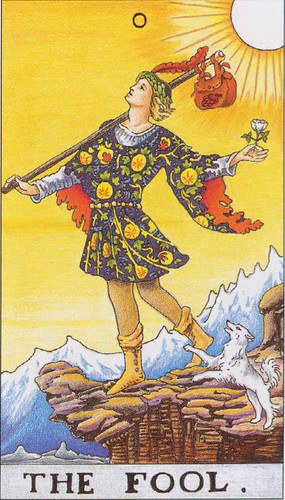
0 The Fool
The Fool, as seen on a tarot card, is about to fall step off the edge of a cliff.

I actually don't believe folly is all that bad - it is the state you start out in when embarking on a journey.  I've learned that I am still the fool when it comes to this trying-to-get-an-agent business.  The important thing is to realize that blunders will be made.  I will trip and fall several times.  I will have to go back and rewrite that one chapter I thought was perfect.  I will write stupid tweets and worry about what people are thinking, if anything at all.  Folly is a learning curve; I've learned that the Fool on the tarot card is represented as a perpetual youth... and aren't we all?  I don't mean perpetually young, but constantly learning.  How else can we learn but through trying and stumbling and getting scraped up... and picking ourselves up again?  

Embrace the fool.  He's really not that bad.  Or fatal.  Or stupid.  He just has convictions about things that haven't been (but need to be) tested.  He doesn't watch where he's going, but he'll soon learn his lesson.  I'd like to see him after he picks himself from tumbling off that cliff, dusting himself off, examining his bruises and looking up to see where he came from. "Well, that was dumb," he might say, "but I don't regret a moment of it."  

So... write like a fool to write better.  Laugh at yourself.  Move on.  Harbor no regrets.  I think I can handle that.

Hegemony

Adventures in Logophilia, Day 175:

hegemony

the over-arching influence or authority over others, domination. 

Monday, March 4, 2013

Elucubrate

Adventures in Logophilia, Day 174:

elucubrate

 oil lamp
by louveciennes

to express studious efforts, working (composing, studying, reading) by lamplight.  I suppose this might be where "burning the midnight oil" comes in.  Whether it's late at night or early in the morning, we all put this to practice because art is calling us.  And there is something about a single lamp (whether electric or flame-illumined) lit in the dark, quiet hours that promises peace. 

Sunday, March 3, 2013

Burgeon

Adventures in Logophilia, Day 173:

burgeon

to put forth fresh growth, or to grow vigorously, flourish.  

I think we're all about ready for Spring, aren't we?  In another sense, after a week of craziness at work and strange stomach issues on top of that, I am ready to get back into my writing soil and put down roots once again.

 Seedling growing out of log

I remember I saw this word on the cover description of a novel I read a lot as a kid.  I didn't know how to pronounce it, so I took it to my dad who say "maybe, bur-GOYN?" So for years, that was how I said it, perhaps incurring many a puzzled look.   I later realized that it rhymes with "surgeon," and was actually quite relieved.

Saturday, March 2, 2013

Intercalate

Adventures in Logophilia, Day 172:

intercalate

to insert a day into a calendar, or to insert between or among already existing layers or elements.  Every four years we intercalate February 29, otherwise known as Leap Day.

Day 60
Matt Preston

I've always had this strange fantasy of mixing up the months which contain 30 days with the those containing 31 days.  It would be an easy mistake to make, wouldn't it?  I don't know much about our calendar and why certain months were given a certain number of days to total out to 365 or 366.  I imagine that if we had to insert another day into our calendar to, say, balance out dramatic changes in time, adding days to November, February, April, June and September would be an easy change.  There's a science fiction story brewing here.  I just know it.  Dibs!

Friday, March 1, 2013

Tessera

Adventures in Logophilia, Day 171:

tessera

A tessera was a small tablet made of wood, clay or bone, which the Romans used as a ticket, tally-token, voucher or even a means of ID.  These came into play in The Hunger Games, as the number of tessera traded and bargained for by eligible candidates for the Games could mean the difference between surviving and starving under the rule of Panem.  It is just one of many Roman flavors Suzanne Collins gave her series. 

Thursday, February 28, 2013

Quincunx

Adventures in Logophilia, Day 170:

quincunx

an arrangement of five things in a square in a square or rectangle, one at each corner and one in the middle.  I always think of five pillars when this word comes up: four pillars holding up a structure at each of the distinct corners, the fifth secretly holding up the middle. 

FOUR208 - The quincunx
A series of quincunx from an ancient puzzle.

Wednesday, February 27, 2013

Univocal

Adventures in Logophilia, Day 169:

univocal

This adjective indicates "only one meaning", unambiguous, and quite clear.

Tuesday, February 26, 2013

Lemniscate

Adventures in Logophilia, Day 168:

lemniscate


the symbol representing infinity, or (to be more mathematical) a figure-eight shaped curve whose polar coordinates are p²=a² .  This is from the Latin word lemniscata, meaning "hanging ribbons."

Infinity

Monday, February 25, 2013

Rowel

Adventures in Logophilia, Day 167:

rowel

This verb means to goad with or as if with the pointed disk at the end of a spur, or more generally to vex or trouble.  This is from the Anglo-Saxon word roele, meaning "small wheel", indicating the spurs on a knight's (or a cowboy's) boots.

spurs
Christopher Nixon

Sunday, February 24, 2013

Nychthemeron

Apologies for this late posting.  I am blogging from an oblique position, as I've been enduring a mild stomach bug this afternoon and evening.  No Oscars party for me.  

Adventures in Logophilia, Day 166:

nychthemeron

a full period of night and day, from the Greek - literally, night (nykt) + day (hemera).  (Merriam Webster)

 184/365- ‘NIGHT & DAY’

Saturday, February 23, 2013

Confessions of an Anxious Writer: Episode II

Episode II:  Playing Chess

Pawn
By Old One Eye on flickr

I've found recently that novel writing is like playing a continuous, unhurried game of chess with oneself.  When it comes to anxiety, this has been good - not as a mere distraction - but a problem-solving exercise. 

I have to admit, I'm not very good at the actual game, but my own sort of chess tends to challenge me in similar feats of strategy.  Instead of trying to defeat an opponent and losing pieces, I try to execute a scene with the best combination of plot, character nuance, and word choice, as possible.  Particularly in the early drafts of a novel, when the story is just beginning to emerge and could become anything under the sun (or beyond the sun), what grabs my attention is the great puzzle of Making It Work.  

Each draft is a testing ground, with the squares clearly marked and the pieces in place - each character, each event that I have mapped out (more or less solidly), every possible "move" visible.  I learn by testing the waters.  If I put my main character in situation A, I can see how a secondary character might react or retaliate, resulting in situation B.  Instead of checks, I can move backwards, retracing my steps and write them again, taking a different path to achieve my goal and seize a particular square on the board.  Writing and rewriting (and re-rewriting) teach me particular patience, especially with myself: "Okay, that doesn't work.  What can I move around to make it work?  Ah, have A come into the room instead of C, and have B listen in from the other room..."

This is a kinder game than chess actually is, but it is no less strenuous.  In chess, the queen, knights, bishops, rooks and pawns move to protect the king.  If the king is check mated, the game is over. In writing, each piece is an element (characters and events), maintaining the forward momentum and central focus of a story.  If the king falls, I know what can be fixed, and made better.  I have an arsenal of queens at my disposal.

When it comes to my chronic anxiety, this game of chess is not an escape but a calming technique.  Everyday life is invariably out of our immediate control, and anxiety sufferers feel this deeply.  While there is no way to remedy that, the plot tangles and twists I create provide a puzzle that can almost always be solved.  Most of the time this has a particular organizing and calming affect.  Other wise, being in the midst of the story is an excellent gauge of my anxiety: if I am suddenly worried about a plot line or not being able to make something work, I know it is probably time for a rest... to put the pieces away for a day or two and come back to the scenario when the brain has cooled down.  The best way to cool down?  Using a different part of my brain.  I often resort to Latin exercises when I'm stressed, which requires more logic. 

I will always be prone to seasons of self-doubt.  That is unavoidable for us all. The bottom line is that the challenge of writing, my most natural way of interacting with the world, has not only shown me where my limits are, but where my strengths lie.  And the wonderful thing is that having the courage to complete the game will make me stronger and more patient with myself. 

How has writing helped you through your challenges?

Waif

Adventures in Logophilia, Day 165:

waif

A late Middle English term (Oxford Dictionaries) referring to a stray person or animal, especially a homeless child, found without an owner and quite by chance. Waif can also refer to an unclaimed piece of property found (as if washed up by the sea) or stolen goods abandoned by an absconding thief.  I am currently reading The Snow Child by Eowyn Ivey, a beautiful novel about a such mysterious waif who enters the lives of a husband and wife on the Alaskan frontier ca. 1920.

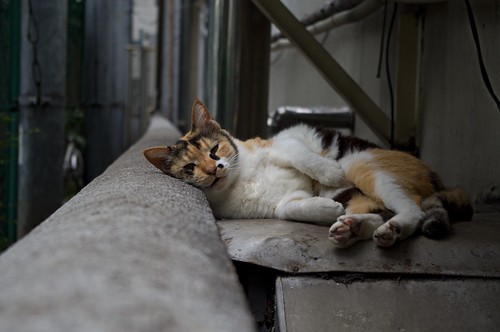
 Stray cat

Friday, February 22, 2013

Patina

Adventures in Logophilia, Day 164:

patina

A film (usually green) that forms naturally on copper and bronze due to long-term exposure (or artificial acid treatments), valued for its color.  I love this word - it is the surface mark of something that has grown beautiful with age and use.  It also describes ones appearance or aura derived from association, habit or established character.  More generally: a superficial exterior.

Thursday, February 21, 2013

Melliferous

Adventures in Logophilia, Day 163:

melliferous

an adjective which means "yielding or producing honey."

Wednesday, February 20, 2013

Duende

Adventures in Logophilia, Day 162:

duende

Pronounced du-'en-dey, this is the power to attract through one's personal magnetism and charm.  Duede comes from the Spanish word for ghost or goblin, and is used to describe to the magnetic power or force that draws an audience to the performance of a flamenco dancer.

Tuesday, February 19, 2013

Germane

Adventures in Logophilia, Day 161:

germane (adj)

being immediately appropriate and relevant, fitting.

Monday, February 18, 2013

Vector

Adventures in Logophilia, Day 160:

vector

A quantity that has magnitude and direction, generally represented by a directed line segment, the length of which represents the magnitude while its orientation indicates direction.  More simply, vector is a course or compass direction.  I like to use to the word vector as an alternative to "plot", because more often than not, I find that my novels and stories tend in certain directions of their own volition, and that the only way to know where they're headed is to travel with them, using an outline as a compass only to keep my bearings.

Sunday, February 17, 2013

Keyway

Adventures in Logophilia, Day 159:

keyway

Simply, a keyway is the groove or channel for a key, especially in a lock requiring a flat metal key.


Saturday, February 16, 2013

Threshold

Adventures in Logophilia, Day 158:

threshold

This noun has a few interesting facets:

1.) a section of wood or stone that lies under a doorway;

2.) a means or place of entry, or a place at the beginning of something;

3.) the point or level at which a physical or mental effect begins to be produced, as in "pain threshold": at which level do you begin to feel it?

According to Oxford Dictionaries, threshold is an Old English word - thresh being related to tread in a Germanic sense, and hold (perhaps) emphasizing "place to tread." This leads me to believe that the naming of Thresh in The Hunger Games was not entirely coincidental.  In fact, it probably wasn't.

Friday, February 15, 2013

To Osculate

Adventures in Logophilia, Day 157:

osculate (v)

To kiss (mathematically).  This is a geometry term used when a pair of curves or surfaces touch on a common tangent.  Using the word as "kiss" has a humorous context, but I'd imagine it would be perfect to describe two science scholars in love.


Thursday, February 14, 2013

Corybantic

Adventures in Logophilia, Day 156:

corybantic

This is an adjective meaning "wild and frenzied". This term is from the mid-17th century - corybantic being derived from Corybantes, which is the Latinized name of the Phrygian goddess of nature who was known for her wild dances.  Phrygia was an ancient region of Asia Minor, which saw the peak of its influence from the 6th the to 8th century B.C.  I am almost positive the first place I saw this word was in John Crowley's first book of the Aegypt cycle, The Solitudes

Wednesday, February 13, 2013

Paraselene

Adventures in Logophilia, Day 155:

paraselene

Broken down, the word means "beside the moon." This is a bright spot formed in the sky like a parahelion, a sun dog, only a paraselene is formed by moonlight.  This is also known as a mock moon or, yes, a moon dog.

Tuesday, February 12, 2013

Abyss & Two Adjectives

Adventures in Logophilia, Day 154

abyss
abysmal
abyssal

An abyss (n) is a very deep or bottomless hole, sometimes used in reference to outer space. (In every Star Wars movie, there always seems to be a great, bottomless shaft over which characters much swing and into which villains must fall.) From it come two adjectives, one emotional, the other more general.  Abysmal indicates an immeasurably deep, bottomless place or absolutely wretched.  Abyssal on the other hand refers to an unspecific depth, and, frankly, sounds nicer.  What is it about the m in abysmal that produces a wretched connotation?  I like to think of it (perhaps inaccurately) as abyss + mal = depth, bad. 

Monday, February 11, 2013

Mystical

Adventures in Logophilia, Day 153:

mystical (adj)

Mystical refers to mystics or religious mysticism - in other words, spiritually allegorical or symbolic, transcendent of human understanding.  More generally, something mystical inspires a sense of spiritual mystery, awe and fascination as concerned with the soul or the spirit, as opposed to material things.  This word is also used to refer to ancient religious mysteries or other rites that have occult or esoteric (hidden) origins.

I remember early on in my writing (probably in the early high school phase) using this word repeatedly without really knowing what it meant.  One thing that is clear to me now is that mystical comes from mystery, and sounds like "mist-ical." Although it's an inaccurate way of looking at the word, "mist" audibly points me to the idea that complete understanding of the universe is misted over, and as writers, we have the gift to walk into that mist and write of what lies on the other side. 

Sunday, February 10, 2013

Confessions of an Anxious Writer: Episode I


A Story


In the future, I hope to share my experiences living with anxiety as a writer.  The best way to begin our first episode is with a story.   

In the fall of 2005, I was taking the second exam in my favorite class, England from 1066 to 1688. I'd been studying hard, but it hadn't felt like studying because the stories of medieval England, as told by my engaging professor, had sparked my imagination.  It should have been an easy, fun exam (if there is such a thing): a few paragraphs describing Joan of Arc, the War of the Roses, the dramatic death of Richard III and the reign of Elizabeth I.


But something happened that I had not expected: a melt down.  (I mean, why on Earth hadn't it happened in that awful statistics class?)  I remember sitting there in the classroom, quiet but for the sounds of other students' pens and shuffling papers, and suddenly feeling all the knowledge I had packed into my brain evaporate, leaving my head empty... making plenty of room for panic.  I found myself completely unable to write - paralyzed and ashamed and terribly confused. 

What a blessing it was that Professor Carole caught sight of me turning a bright shade of crimson, biting down on my hand to stifle any sounds as the tears streamed down my face. She gently coaxed me out of my chair and into the hallway.  "Go home and rest," she said. "You can take the exam when you're feeling better.  There's nothing to be ashamed of."

This was just one of many stories I can tell you from my life that fell into place when I was diagnosed with Generalized Anxiety Disorder (GAD) and Social Anxiety Disorder (SAD) in college.  I knew I'd been an excessively worried and weepy little girl and teenager, but no one had ever been able to tell me why.  These days I can tell you plainly: my brain produces too much serotonin.  I am not overly sensitive or twitty.  It's the way I was made.

Writing and Anxiety


As a writer, this self-knowledge has been extremely helpful, especially as the writer's path is by nature precarious.  Having set out to publish a novel and knowing that it might take years for this dream to be achieved, I know it is not for the faint of heart.  Though early in the process, I have been beset by anxious thoughts, an internal Sturm und Drang of doubts and fears mixing with the desperate desire to get my story out there.  As you know, the direct way for an unpublished writer to begin that journey is to appeal to literary agents via (hundreds of) query letters - a subjective process that can either make or break you.  Arguments for practicality and "common sense" would ask, understandably, why on Earth I'd choose this path when it is 1.) uncertain and an indirect path to "success", and 2.) likely to expose me to more anxiety-causing situations.  In other words, isn't writing the stupidest thing you could do?

Far from it.  Throughout my life, but especially now in my late twenties, I have realized how much writing has been a natural survival mechanism.  My days are better and calmer when I stick to a self-prescribed regimen of at least 2,000 words per day - 2,000 words most likely spent world-building in my novels.  Somehow said activity balances the chemicals in my brain.  I equate this to having a C-drive cleaner on your PC; writing gets rid of the chemical junk and allows my brain to function better.  Writing is the one thing I know I can rely on for solace and steady ground.  It is not simply a fun little hobby I picked up in childhood and was never quite able to grow out of like a child and a beloved stuffed animal.

Writing is not only an enjoyable activity, but a lifestyle.  It is something that I love, something that brings order to my otherwise chaotic world.  The more I learn about craft, the more I learn about myself, and the more I want to bring my stories to the world to share with other people.  For these reasons, the uncertain road to publication becomes less daunting and more of a necessary learning experience.  That does not mean my anxiety will ever fully go away.  It does mean that facing anxiety-provoking situations is a necessary risk (or self-challenge) for the sake of art. 

Again, I think of what Stephen King said: art is a support system for life, not the other way around.  He was talking about a desk, but this can be applied more broadly.  Art is medicine, the antidote for situations out of our control.  Let's face it: much of the human experience is out of our control.  Finding out how to make that art work beautifully is our most important quest.  No one else can take that journey for you.  

Plain Facts About Anxiety


  • Anxiety is characterized by exaggerated worry and tension, though there might be nothing specific to provoke it.  A person with Generalized Anxiety constantly anticipates disaster, or a combination of any number of snowballing crises such as health, money, family or job-related stresses.
  • Anxiety is caused by an imbalance of neurotransmitters (messenger chemicals) in the brain.
  • Anxiety disorders are chronic.  They are not the result of someone simply "not dealing" with their problems.  An anxiety disorder is about how someone was made, not about their choices.  Seeking (or not seeking) treatment in counseling and in medication is a choice.
  • Telling an anxiety sufferer to "get over it" is unhelpful, and might make his or her anxiety worse.
  • Anxiety is hereditary.
  • Anxiety is often closely connected to depression.  
  • Twice as many women as men suffer from anxiety.
  • In brief, methods of treatment can include: 1.) Medication to balance out the chemicals, 2.) counseling, which will give you the tools to change how you approach your anxiety, your triggers and your mechanisms of coping, 3.) exercise, 4.) eating right and staying hydrated, 5.) get plenty of sleep, 6.) reducing the time spent on social networking sites.

Sources


http://www.anxietydisordersfoundation.org
http://health.howstuffworks.com/mental-health/anxiety
Sturm und Drang

Adventures in Logophilia, Day 152:

Sturm und Drang

directly translates from the German as "storm and stress."  In other words, turmoil on an epic scale... describing massive snowstorms (that some apparently want to call "Nemo") and hurricanes, war or social strife, or even anguish on a deeply personal level.  This word is a classic example of how English is a sponge for words from other languages to convey concepts in ineffable but no less understandable ways.  When you hear "sturm und drang" aren't you just a little freaked out?

Saturday, February 9, 2013

Elflocks

Adventures in Logophilia, Day 151:

elflocks (n)

a tangled mass of hair.  This is the style of Peter Pan, Puck, Bilbo and Frodo Baggins, and various children of the woods, fairy stories and daydreams.  Think unkempt mop.

Friday, February 8, 2013

Insipid

Adventures in Logophilia, Day 150:

insipid (adj)

Lacking taste or particular savor.  Dull.  Weak.  Think cream of wheat without brown sugar or watery coffee.  (Bleh!)  Applied to character, this is quite the potent word.

I once thought this was another synonym interchangeable with stupid or ridiculous, but I learned it pays to actually look up words I want to use!  

Thursday, February 7, 2013

Cipher (j)

Adventures in Logophilia, Day 149:

cipher (n)

One my favorite words because it has so many facets.  This is what I call (& how I describe) the villains in my novel.

A cipher is:

1.) A secret or disguised way of writing, a code or a thing written in a cipher, or a key to such a cipher.

2.) A zero, or the figure 0.

3.) A person or thing of little or no importance, especially one who does the bidding of others and tends not to have a will (or identity) of their own.

4.) A monogram.

5.) The continuous note of a malfunctioning organ pipe.

I've also seen it spelled "cypher" but I believe this is atypical. 


Wednesday, February 6, 2013

Luciferin (j)

Adventures in Logophilia, Day 148:

luciferin (n)

Luciferin is the natural substance present in certain organisms that produce heatless light upon oxidation - like fireflies.  This is from the Latin word "lucifer" meaning "light-bearing," and, yes, is also the name of the Devil.  Ironic, no?

Tuesday, February 5, 2013

Unctuous (j)

Adventures in Logophilia, Day 147:

unctuous (adj)

Greasy, oily, smug.  Falsely earnest.  The cigarette-smoking man (The X-Files).  Thomas Barrow (Downton Abbey). The Master (Doctor Who). 


Monday, February 4, 2013

Repose (j)

Adventures in Logophilia, Day 146:


repose (n)

Repose is sleep, often used to mean eternal or heavenly rest.  It also means calm or peace in an absence of activity or movement.  Composure.  Poise.  

Welcome

to a blog by three people who write, for anyone else who wants to write. It's a cruel world for creators, and here we promise support, whimsy, and curiosity that will hopefully keep your pen moving and keyboard tapping!

To read more about why Daedalus Notes exists, click
here.